6:30 on a Friday
Four years in local kitchens taught me what the phone sounds like at 6:30 on a Friday: ringing, and ringing, while everyone’s hands are full. Nobody is ignoring it. The person at the counter is ringing up a line out the door, the kitchen is buried in tickets, and the one phone in the building keeps going.
Every call nobody answers is a customer who orders somewhere else. Most owners know this. Very few can do anything about it, because the fix has always been “hire another person,” and on a Friday night there’s no room behind the counter for another person.
Picking the first restaurant
I started with a taqueria near campus that stays open until 2 a.m. on weekends, exactly the hours when a short-staffed counter can’t get to the phone. I didn’t ask anyone for anything first. I built the receptionist from the restaurant’s public menu, because I wanted an owner to hear it take an order, not imagine it.
Three days, ten versions
The receptionist is a real phone number. A call comes in through Amazon Connect, Amazon Lex turns speech into text, and Claude on Amazon Bedrock runs the conversation. A natural-sounding voice reads the replies back to the caller, and every call is logged in DynamoDB so I can review it afterward.
Between September 28 and September 30, I shipped ten versions to the live line. Each one followed a few rules I wouldn’t compromise on:
- Code does the math. The model never guesses a total. Prices and totals are calculated by the system.
- Every order is read back before it’s sent to the kitchen as a ticket.
- No card numbers, ever. Customers pay at pickup, the same as a phone order today.
- No allergy promises. It takes a message so someone from the kitchen can call back.
- It says it’s an AI if anyone asks, and it offers to take a message for staff.
By the third day it spoke Spanish, remembered regular callers for 30 days (“same as last time?”), wouldn’t take an order for “right now” when the restaurant was closed, and scaled its pickup time to the size of the order.
Calling it until it broke
The useful part of building something like this is calling it over and over. Real test calls turned up real problems. It asked a caller for his name after it had already greeted him by name. It quoted fifteen minutes for twenty burritos. It ended one perfectly good call with “Sorry, we’re having trouble with the phones.” On speakerphone, its own echo could interrupt its read-back.
Every one of those got fixed, and every fix went out the same way: back up what’s live, run the full test suite, deploy one change, call it again, write it down. That discipline is the actual product. A restaurant owner isn’t buying AI. They’re buying confidence that the phone will be answered correctly at 6:30 on a Friday.
Doing the math
Before pitching anyone, I worked out what each call costs to run: about 18 to 24 cents per order call, mostly phone minutes and the voice. That made the pricing simple to explain. It’s a flat monthly fee, month to month, with no per-order cut, and it pays for itself if it catches one missed order every other day.
I also looked at who else is selling this. Plenty of companies offer AI phone answering, and the point-of-sale systems these restaurants already use are building their own. My edge isn’t the technology. It’s that I’m local, I set it up in person, it speaks Spanish, and when the menu changes, the owner texts me.
Selling it
The pitch isn’t a slide deck. It’s a test: “Can I call your restaurant Friday at 6:30 and see if anyone picks up?” If someone answers, great. If nobody does, the owner just heard the problem for themselves, and the demo line is ready to show them the alternative.
I built a list of independent Chico restaurants where the phone matters most: taquerias, to-go spots, and late-night counters. As of this writing, the demo line is live, the sales kit is ready, and a second restaurant’s menu is already loaded and waiting on the owner’s details. The first owner conversations are next.
The same instinct, on the web
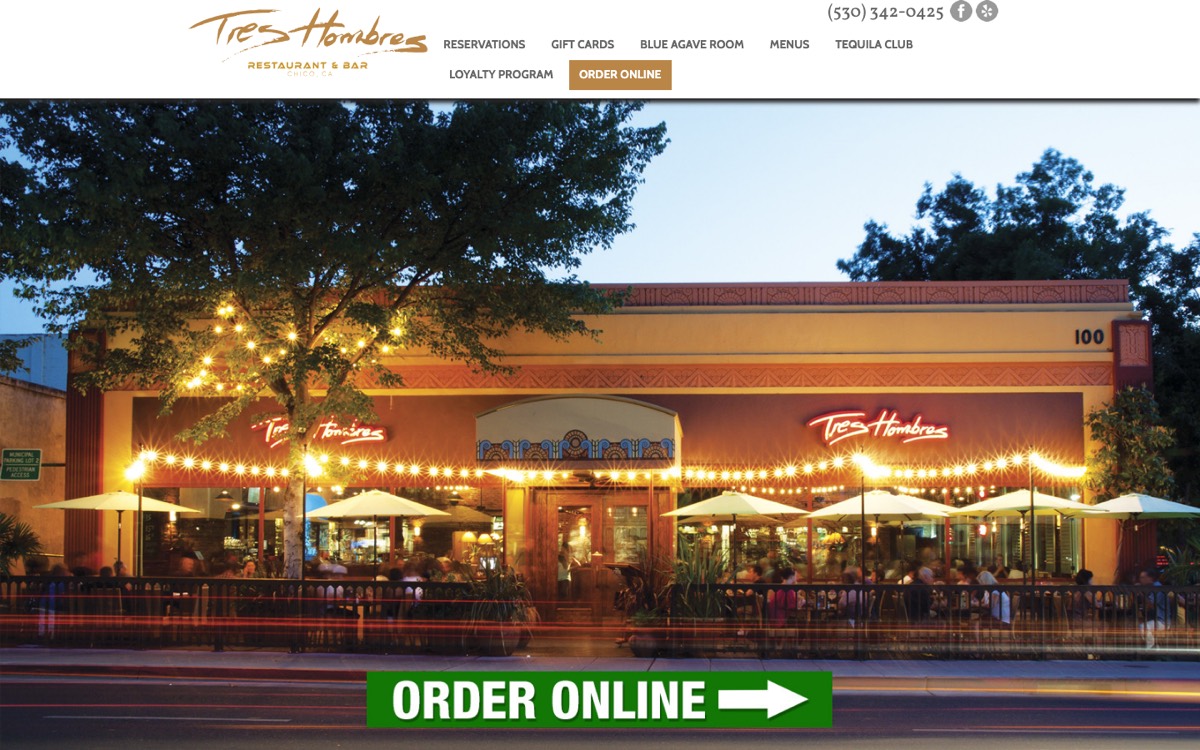
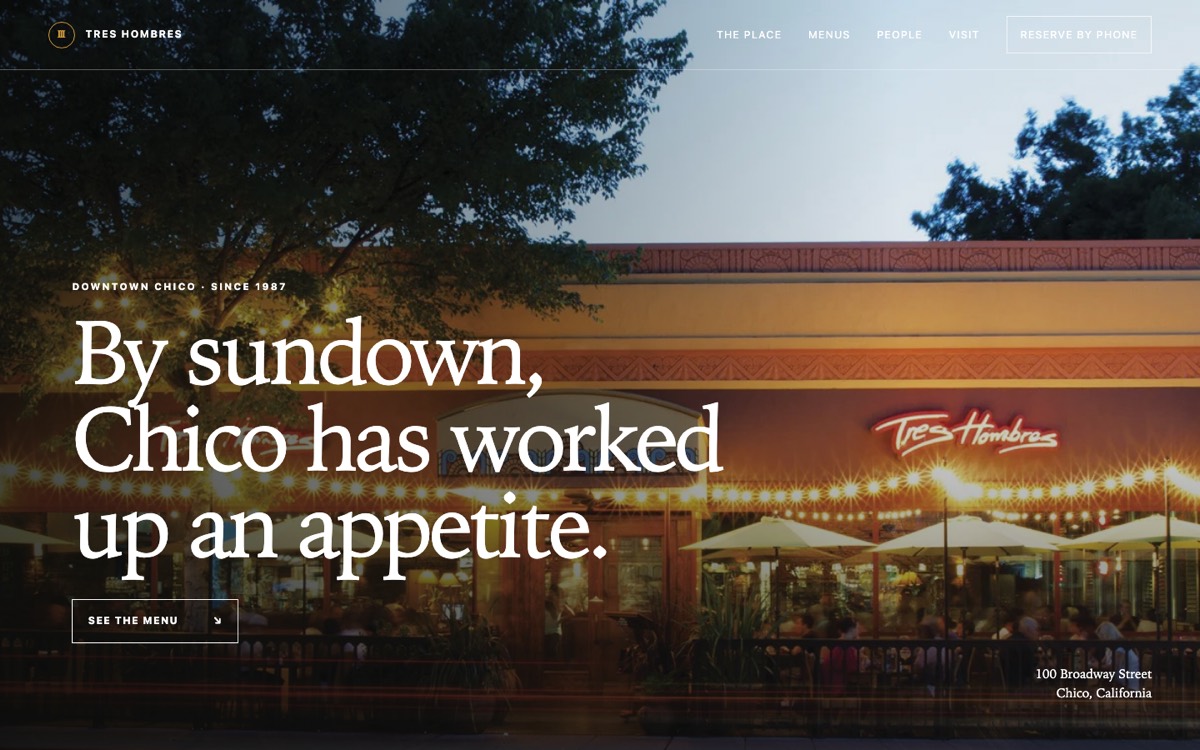
I train crew at Tres Hombres, a downtown Chico restaurant that’s been open since 1987. So I rebuilt its homepage as a concept: the restaurant’s real photography, a cleaner menu, and the phone number where a hungry person expects to find it. Nobody asked me to. Like the receptionist, it exists so an owner can see the finished thing instead of a proposal.
What I learned
Local businesses don’t buy AI. They buy the phone getting answered, the order coming out right, and someone they can call when something changes. The technology was the easy part. Earning that trust is the work.